7 Appliance Mistakes to Avoid When Building a New Kitchen
I spent more than a decade selling kitchen appliances. Here are some of the biggest mistakes I've seen people make when building a new kitchen.
1. Choosing your appliances too late
Appliances can affect your cabinetry, electrical requirements, plumbing, ventilation and even the layout of your kitchen.
Don't leave them until the end, when you may be forced to select an appliance based on what fits into the predetermined spaces, rather than choosing what you actually want and what works for your family.
Your appliances should be part of the kitchen planning process from the beginning, not an afterthought.
2. Assuming every “standard” appliance will fit
This is one I have seen cause some very expensive headaches.
A “90cm cooktop” can vary significantly in its actual dimensions. Depending on the model, the required cut-out can be very different from one appliance to another.
When you're working with stone benchtops, getting this wrong can be particularly costly. You could find yourself trying to return an appliance to a retailer that doesn't want to take it back, or paying a stonemason to come and modify your benchtop.
Always check the actual appliance dimensions and installation requirements before you order.
3. Choosing appliances based on specifications alone
Bells and whistles can be absolutely fantastic... if you're actually going to use them.
It can be very easy to get swept up in every new feature and the latest technology, but the most advanced appliance isn't necessarily the best appliance for you.
If you're someone who always uses your oven on fan-forced, for example, are you really going to get value from paying significantly more for a range of cooking functions you may never use?
Think about how you actually cook and live before paying for features you may never need.
4. Undervaluing your rangehood
Your new kitchen can look absolutely beautiful, but if you purchase a cheap rangehood that sounds like a helicopter has just landed in your house, you're probably still going to hate cooking in it.
Even worse, if it isn't actually extracting effectively, you're left with a kitchen that is loud, smelly and potentially exposing your cabinetry to excess moisture and cooking residue.
Your rangehood is one of the appliances I would strongly recommend doing your homework on.
Invest in your rangehood. You're unlikely to regret it.
5. Forgetting about installation requirements
This is a big one.
Don't buy a fridge that is 80cm deep when your kitchen cabinetry is only 60cm deep, or choose a cooktop without checking its electrical requirements.
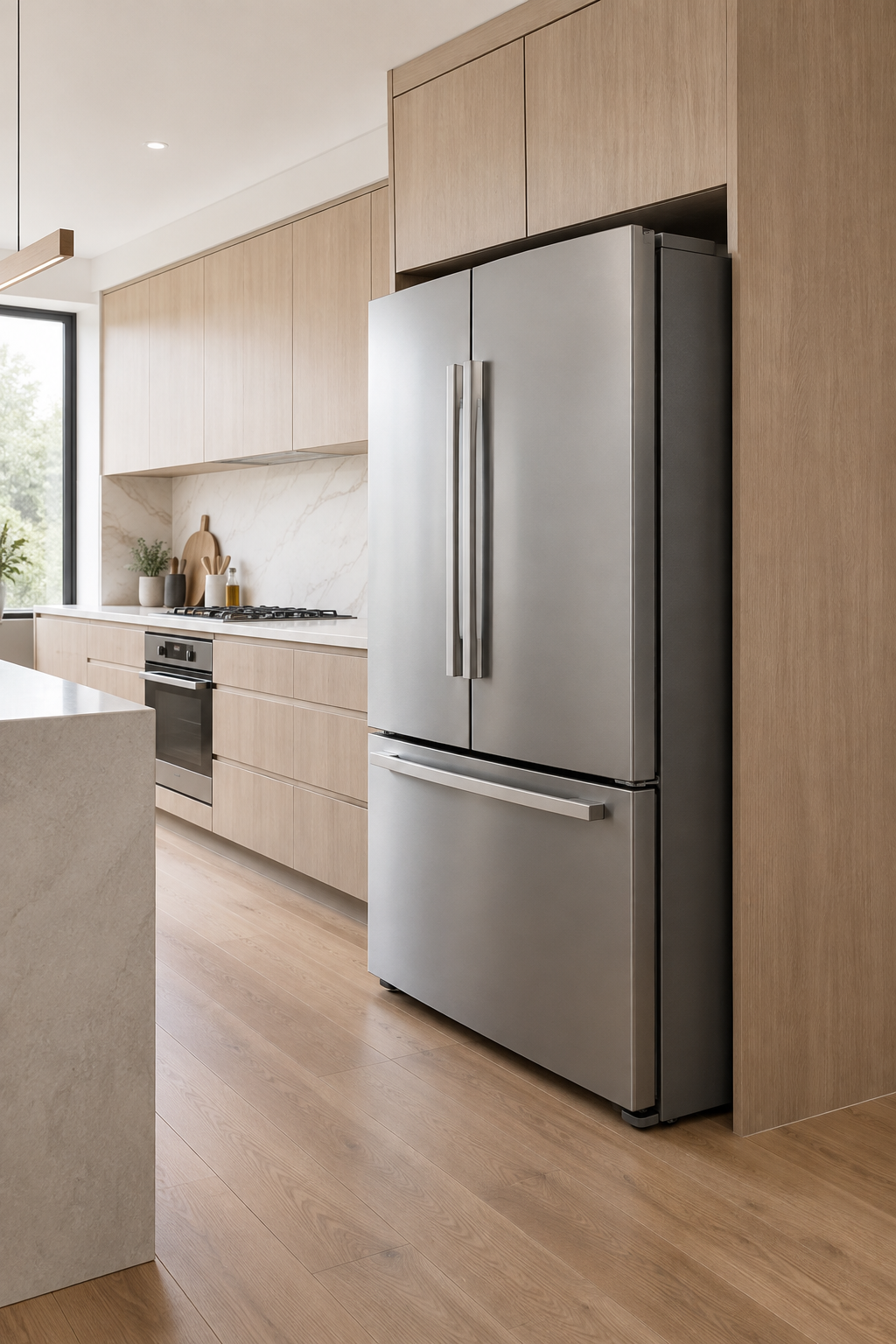
Appliances have specific electrical, plumbing, ventilation, cabinetry and clearance requirements. These can all become expensive problems if they're discovered after your kitchen has already been designed or built.
The appliance needs to work with the kitchen, not the other way around.
6. Assuming the most expensive option is the best option
More expensive doesn't automatically mean better for you.
Sometimes an upgrade is genuinely worthwhile and can make a noticeable difference to how you use your kitchen. Other times, you're paying for features, finishes or technology that you simply don't need.
A more expensive appliance isn't necessarily a better investment if it doesn't suit the way you actually live.
The goal shouldn't be to buy the most expensive appliances you can afford. It should be to spend your money where it will make the biggest difference to you.
7. Taking advice from too many different places
You can visit five different stores, speak to five different salespeople and probably receive five different recommendations.
And as a consumer, you often have no way of knowing whether the person giving you that advice has been working in the industry for five minutes or five years.
There are plenty of knowledgeable and genuinely helpful people working in appliance retail, but it's important to remember that appliance stores are there to sell appliances.
That doesn't necessarily mean the advice you're receiving is wrong. It simply means that, when you're making a significant investment in your kitchen, it can be difficult to know whether the recommendation you're being given is based entirely on what is right for you.
And that's where the process can become overwhelming.
So, what should you do?
You don't need to become an appliance expert just because you're building a kitchen.
You need someone who understands the industry, knows what questions to ask and can help you work through the options based on your kitchen, your budget and the way you actually live.
That's why I created Bailey Lentini Appliance Consulting.
After more than a decade working in kitchen appliances and helping thousands of people make these decisions, I wanted to create a service where I could provide genuinely independent and impartial advice, without representing a particular retailer or brand.
You can do all the research yourself. Or you can let someone who has spent more than a decade doing it help you.